Agentic RAN and opportunities
by Milad Natanzi
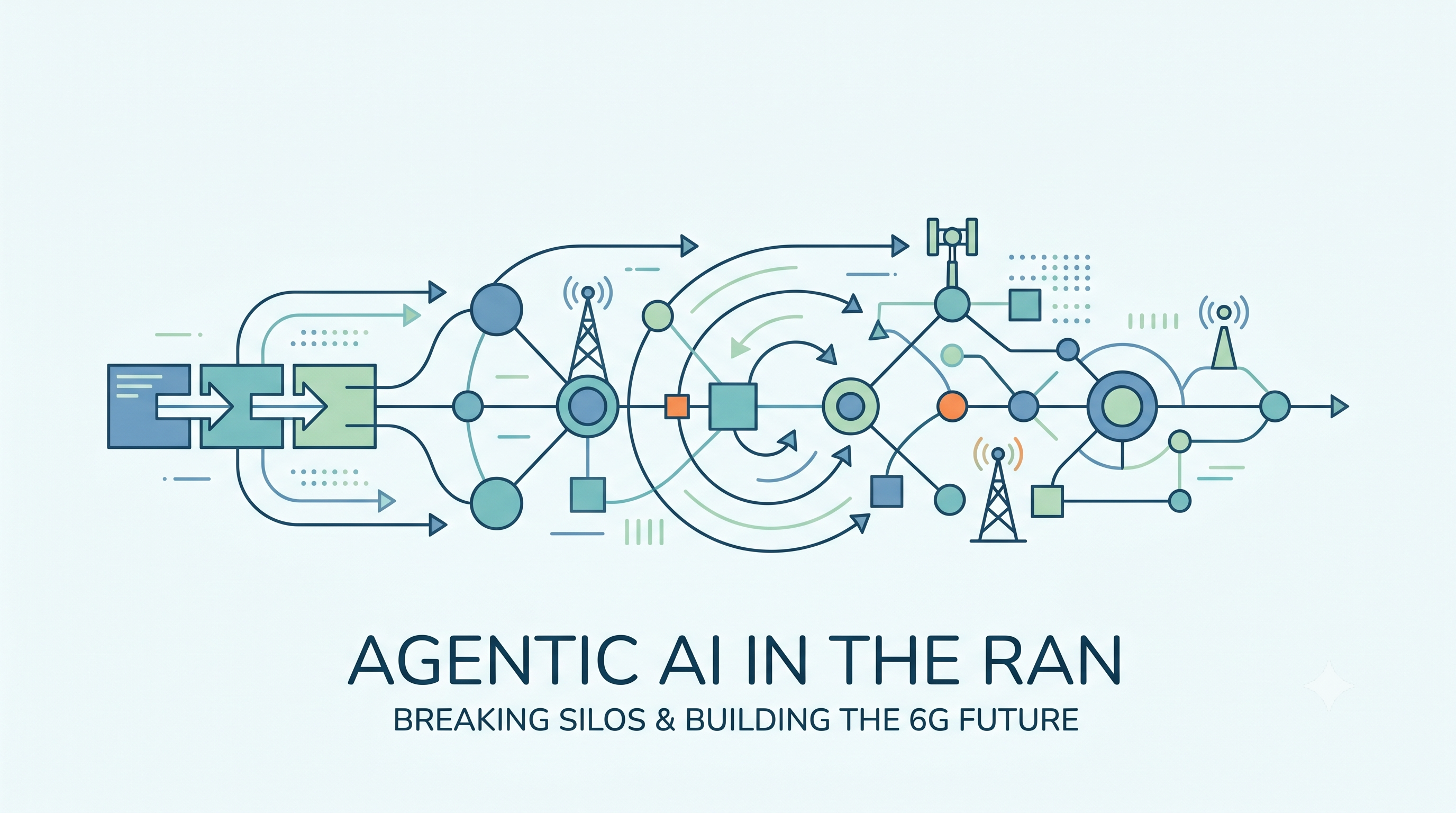
In today’s commercial telecom networks, Radio Access Network (RAN) development, optimization, and maintenance are often highly siloed operations. Different teams across various operators and vendors rely on their own proprietary tools and dashboards to manage specific segments of the network. While certain processes have been automated, these automations remain isolated, requiring continuous oversight and heavy reliance on manual human intervention.
This traditional approach not only leaves a wide margin for human error but also drives up Operational Expenditure (OpEx) to unsustainable levels. It is time to move beyond simple, script-based automation.
The Multi-Vendor Fragmentation Problem
Real-world networks are inherently multi-vendor environments. Resolving a complex outage or optimizing network capacity requires coordination across multiple disjointed teams. This back-and-forth troubleshooting creates severe bottlenecks, delays issue resolution, and ultimately degrades the user experience directly impacting operator revenue.
The Agentic AI Paradigm: From Automation to Autonomy
The solution lies in developing autonomous systems driven by Agentic AI. Instead of relying on a single, monolithic AI, we must deploy a distributed network of intelligent agents, each assigned to a specific domain.
- Multi-Agent Collaboration: Imagine a scenario where one agent analyzes network logs while another evaluates RF parameters and cell planning. When network degradation occurs, these agents can communicate, negotiate, and pinpoint the root cause without human intervention, instantly deploying corrective commands to the equipment.
- Unmatched Precision: By leveraging advanced agentic frameworks and vector databases to process complex telecom documentation (such as 3GPP standards), these systems can execute real-time optimizations with a level of precision that manual operations simply cannot match.
The Evolution of the Human Role
As these agents integrate into the operational layers of O-RAN and the Core network, the role of the engineer will fundamentally shift. We will transition from manual parameter tuning to strategic oversight. With routine and complex technical tasks handled autonomously by agents, our primary focus will pivot toward monitoring high-level KPIs and ensuring revenue assurance. Instead of micromanaging network nodes, we will manage the agents to align with overarching business objectives.
The Road to 6G
Developing and deploying this distributed architecture will require significant engineering effort and scalable software infrastructure. However, as we look toward 6G, adopting Agentic AI is no longer optional—it is an absolute necessity. It is the only viable path to achieving unprecedented communication quality while keeping maintenance costs grounded in reality.
